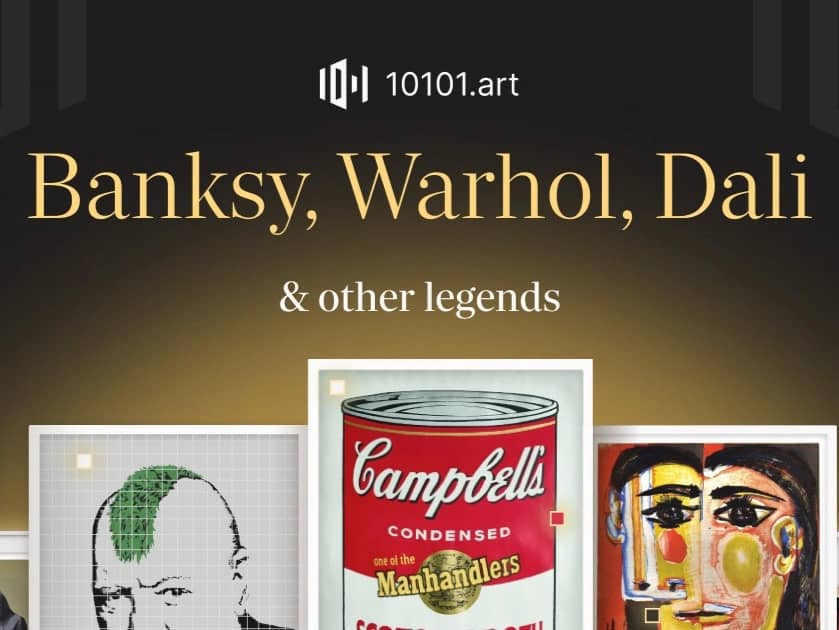
10101.art is a platform focused on the tokenization of physical, blue-chip artworks, allowing collectors to link ownership of these real-world assets to their on-chain identities. The project structures the ownership of masterpieces from artists such as Picasso, Banksy, and Warhol on the blockchain, aiming to merge digital identity with cultural legacy. [1]
10101.art operates at the intersection of fine art and blockchain technology, centering on the concept of Real World Assets (RWA). The platform's model involves sourcing original artworks from renowned masters, arranging for their professional, insured custody, and then representing ownership of these pieces as on-chain digital assets. Each digital token created on the platform is designed to be legally and technically tied to a specific physical artwork, which is stored in secure vaults and may be exhibited at partner galleries. [1]
The stated mission of the project is to enhance the accessibility of fine art ownership and to transform the experience into one that is transparent and secure through the application of blockchain technology. The platform targets a new generation of collectors who view art not only as a visual object but as a language of identity and a method for signaling taste and cultural standing in both physical and digital environments. According to its documentation, many of the artworks it handles would otherwise remain in private collections, unseen for years. 10101.art's role is to source these works, manage their custody and exhibition, and structure their ownership on-chain for a select group of collectors. [1]
The project has reported several key milestones, including the sale of an original Andy Warhol piece and the launch of two major drops featuring works by Banksy and Picasso. It curated a vaulted portfolio reported to be valued at over $10 million. In a notable collaboration, 10101.art partnered with Emaar to host a month-long exhibition in Dubai, showcasing its collection. The platform has also established a partnership with Monada Art Gallery in Dubai as its flagship physical partner and has engaged in collaborations with global events like Art For All, NFT Paris, Blockchain Life, and Art Dubai. [1]
10101.art's product suite is centered around facilitating on-chain ownership of physical art.
The core offering of the platform is the "ownership token," a non-fungible token (NFT) that serves as a digital certificate of ownership. Each NFT is directly linked to a specific, professionally custodied physical artwork. This on-chain link is intended to provide a clear and immutable record of authenticity and a chain of provenance. [1]
The platform includes a proprietary marketplace where users can acquire and trade the ownership tokens. This marketplace is designed to facilitate transactions for the art-backed digital assets among the platform's community of collectors, aiming to provide a dedicated venue for secondary sales. [1]
10101.art features a user profile system that enables collectors to manage their portfolio of ownership tokens. This function is designed to allow users to publicly display their collection of tokenized art, thereby integrating their art holdings with their broader on-chain identity and presence. [1]
The platform incorporates several features to support its ecosystem and art management processes.
A feature within the ecosystem is "ART Points." While the platform's documentation does not provide extensive details on their specific mechanics or function, they are presented as a product related to user engagement. These points may serve as a rewards mechanism or provide access to exclusive features within the 10101.art environment. [1]
A central feature of the 10101.art service is the comprehensive management of the physical artworks. The platform arranges for professional, secure custody, storage, and insurance for all pieces in its collection. This process is intended to ensure the long-term preservation and security of the underlying real-world assets. [1]
Artworks are added to the platform through a defined curation process. This process is managed by an expert team that monitors market offers and actively sources significant pieces by blue-chip artists. The project also plans to incorporate a community voting system in the future to influence the selection process. [1]
The 10101.art ecosystem is built around the interaction of several key groups. The central participants are the collectors, who use the platform to acquire, trade, and display their art-backed tokens. The 10101.art team manages the core operations, including artwork sourcing, verification, tokenization, and platform maintenance. Physical partners, such as secure vaulting facilities and art galleries, provide the essential infrastructure for storing, insuring, and exhibiting the physical art. The ecosystem is further extended through strategic collaborations with global art and blockchain events, which serve as venues for exhibitions and community engagement. [1]
The platform's model is designed to support several primary use cases for collectors and the art market.
The operational process for tokenizing a physical artwork on the 10101.art platform follows a structured, multi-step architecture. The process begins with the sourcing and selection of an artwork, which is conducted through analysis of market offers, active searches by an internal expert team, or a planned future community voting mechanism. Once a piece is acquired, it undergoes a verification process to confirm its authenticity as a Real World Asset (RWA). Following verification, the physical artwork is digitized using specialized equipment to create an ultra-high-resolution digital scan. This large digital file is then programmatically divided into secure segments to ensure data integrity and security. These segments are subsequently used to mint a unique NFT, referred to as an "ownership token," which functions as the digital certificate of ownership. The final step is the registration of this ownership token on the blockchain, which the platform describes as creating an unbreakable link between the digital record and the physical art piece. [1]
The platform's token economy is centered on its non-fungible "ownership tokens." As of the available documentation, there is no information regarding a native fungible token, including details on its supply, allocation, or a formal on-chain governance model for the protocol.
The primary tokenized asset is the ownership token, which has the following utility:
ART Points are another element within the ecosystem with an implied utility:
10101.art has established collaborations with various entities in the real estate, art, and event sectors to support its exhibitions and market presence.